IPGuru takes you from the spark of an invention to a complete, file-ready patent package through one guided conversation. No patent training required. A crew of AI colleagues does the work, and shows you why.
Whether you are starting from scratch or improving a product you already have, IPGuru guides you to the right outcome, a patent, or a trade secret when that fits better.
The problem
Patents are slow, expensive, and written in a language inventors do not speak. Most people with a genuinely novel idea never protect it, because the first step costs thousands and the process is opaque.
How it works
Five phases that name the work you actually do. Focus and Observe are free: tell your idea and find out whether it is worth pursuing. Upgrade a project to unlock the build.
Get the idea down: what it is, the problem it solves, and who it is for.
Find out whether it is worth pursuing: market, competitors, an early patentability read.
Build it out: pictures first, a derived description, the draft, and the claims.
Find out how strong it is: deep prior art, patentability, and a mock examination.
Produce the application and the filing package, ready for your attorney or self-filing.
Start from anywhere
Every invention starts somewhere. Begin greenfield from a fresh idea, or brownfield from what is already out there, uploading your source material to your vault or pointing IPGuru at an existing website. Either way, IPGuru moves you toward genuine novelty, not a copy.
A crew, not a control panel
You talk to Nova. She coordinates a crew of specialists and never makes you manage them. When patent work begins, the patent team joins.
Specialists matched to the country where you will file. They get to work early, running your first prior art checks. Direct chat with them opens once you upgrade to a paid project.
What you get
Not tips about patents, but the documents themselves, produced, scored against a rubric, and made better on request.
Every project builds its own cited body of research automatically. Answers carry their sources, so you always see why.
Picture your invention before you describe it. React to concept images, then the written description is derived from the ones you keep.
A virtual examiner attacks your claims like a real office action, and the draft writer proposes amendments until they hold.
Every draft ships with a jargon-free companion that explains what each claim covers and why it matters.
One download that gives an attorney everything to review and file: draft, prior art, claims strategy, drawings, and more.
A single, honest read on how ready your invention is, from market strength to filing readiness, updated as you go.
Image generation, built in
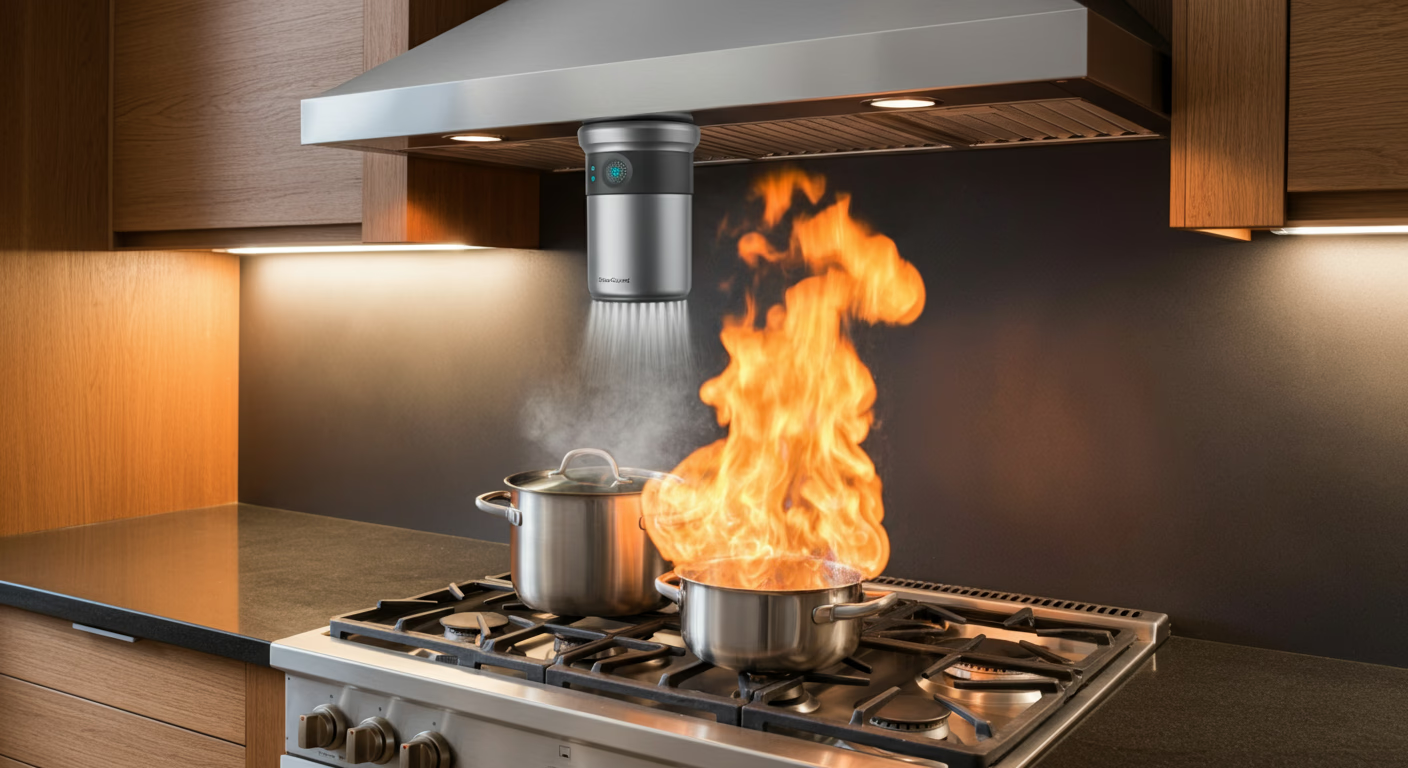
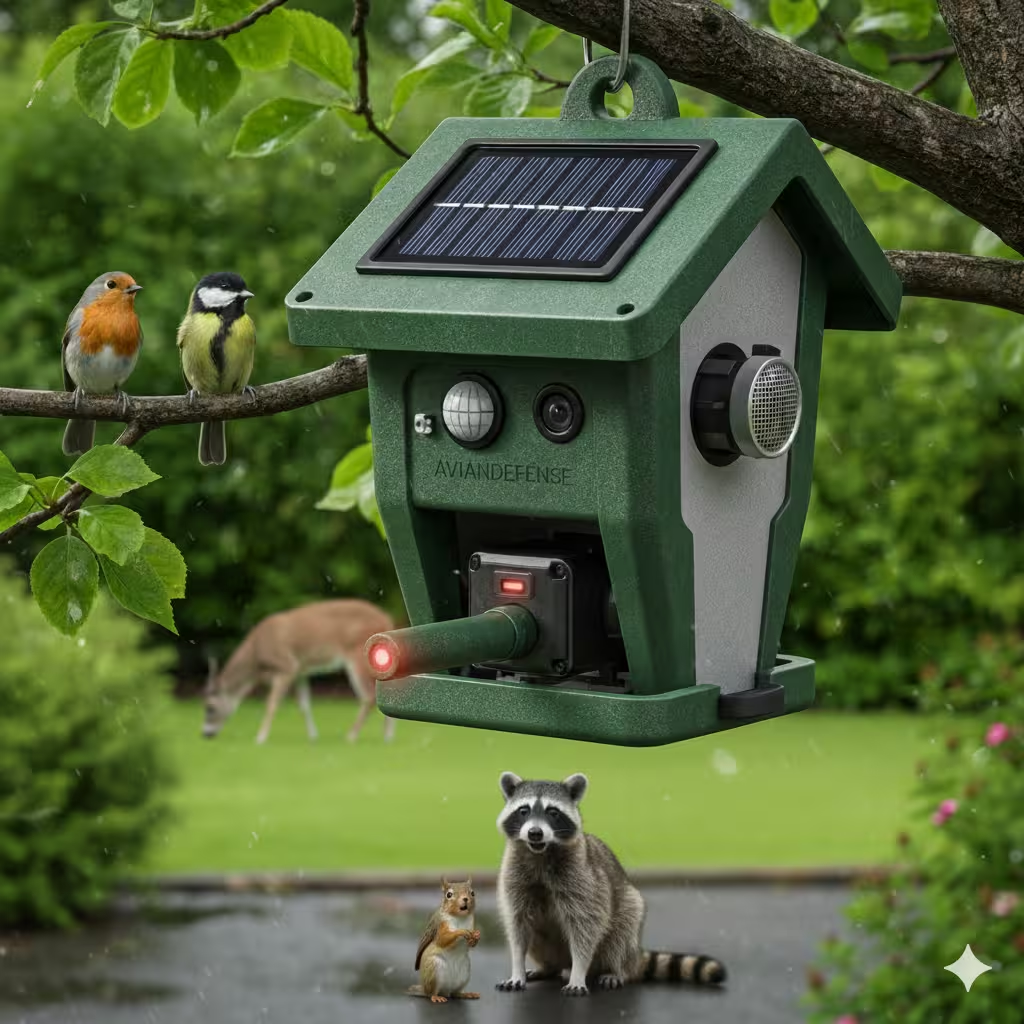
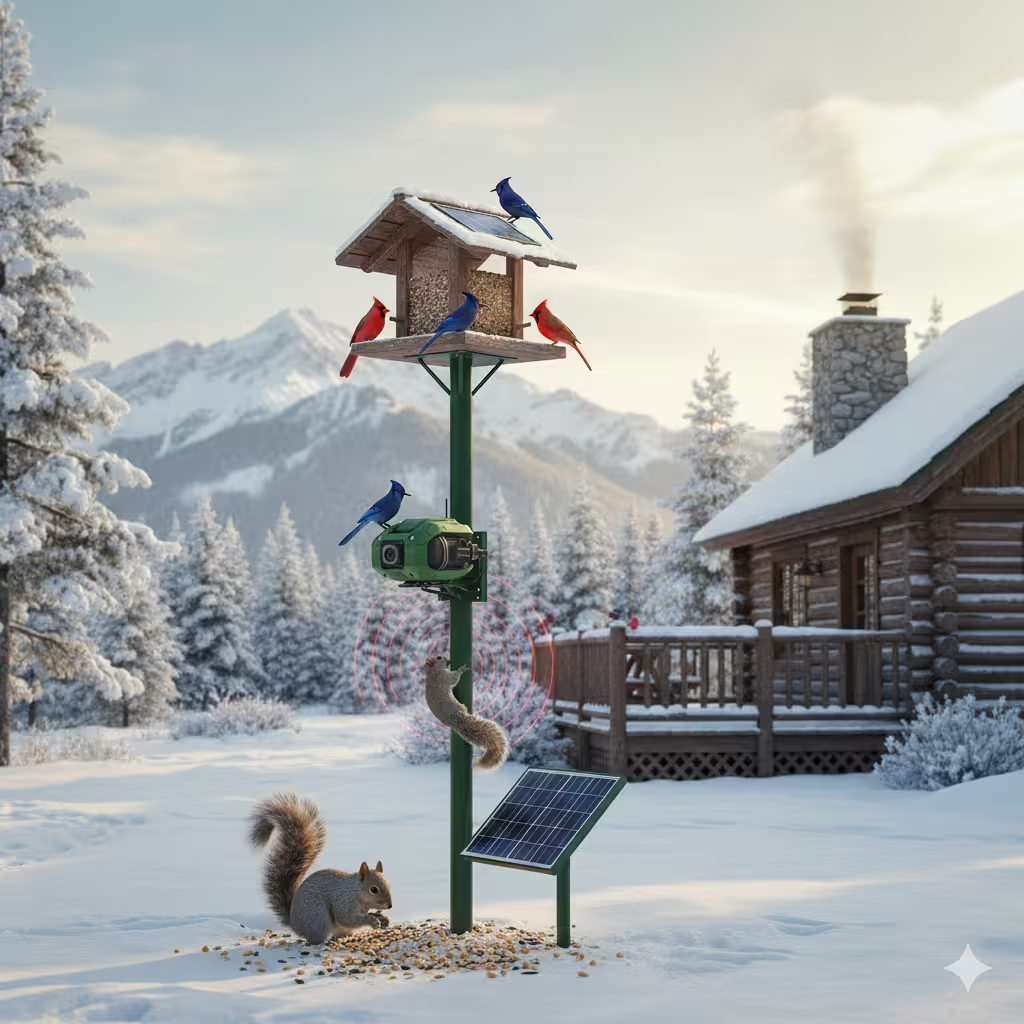
Most inventors can see their idea but cannot write it in patent language. So the pictures come first. Kira, the creative director, generates concept images straight from your conversation. You react, keep, and vary, and the written physical description is derived from the images you accept. Accepted images become your patent figures.
Change the lens at any time. The visual style presets, sketch, product photo, exploded view, in-use scene, and patent line art, are one tap each. A figure pack turns your accepted images into numbered, labelled drawings for the filing.
Grounded knowledge and FrameGraph
Every project builds its own cited knowledge base automatically, from your material and the crew's research. Ask it anything and get an answer grounded in your own evidence, never guessed. Then frame what you know through the FrameGraph.
Answers draw only on your project's base and carry their sources, so you always see why.
Pick a framework from a library of 58, then view your knowledge as text, a network, a treemap, a timeline, or a table.
The vault
Drop your material into your project's private vault and IPGuru turns it into cited, searchable knowledge. The engine is multi-modal, so it reads far more than text.
PDFs, Word, notes, specs, and datasheets, ingested and summarised into your base.
Give it a YouTube link and it transcribes the video automatically, then indexes the transcript.
Uploaded pictures are described on ingestion, with any text read out of them, so a sketch becomes searchable.
Point it at a web page or drop in audio; pages are captured as clean text and audio is transcribed.
Every file is scanned on the way in. Anything unsafe is quarantined before it reaches your base, and your originals stay in the vault alongside the processed version. Your knowledge base is private to your project.
A worked example
It began as a sentence. Through the free discovery loop it became a validated idea with a market read and an early patentability check. On upgrade, the crew built the figures, derived the description, drafted the claims, and hardened them through a mock examination. Here is what the inventor walked away with.
visibility Browse the full sample libraryWho it is for
Turn a notebook of ideas into protected, licensable assets.
expand_moreYou have the idea and the drive, but not a patent budget or a law degree. IPGuru gives you the whole process, guided, so you can protect what you invent without spending thousands just to find out whether it is worth it.
Build a defensible moat before a competitor can copy the core.
expand_moreInvestors ask about IP, and speed matters. IPGuru helps you document the invention, validate patentability, and draft claims broad enough for a moat but tight enough to hold, fast.
Protect a process or product without a five-figure legal bill.
expand_moreYou have developed something genuinely better, and competitors are watching. IPGuru helps you choose between a patent and a trade secret, then protects it at a price a small business can justify.
Take a science-fair project to the next level, in plain language.
expand_moreYou do not need to know what a patent is. IPGuru explains every term inline, reads at a grade-8 level, and walks you from an idea to a real invention disclosure, encouragingly, with no dead ends.
Turn research output into protected, transferable IP.
expand_moreLabs generate novel results that too often go unprotected. IPGuru helps you assess patentability, run rigorous prior art, and prepare a filing-ready package the tech-transfer office and attorney can act on.
Outcomes
"I arrived at my attorney with a complete draft instead of a blank page. It cut the hours, and the bill, to a fraction."
"Two of my three ideas failed validation for free. The third passed, and I filed a provisional the same month."
"I finally understood what a claim is, because it showed me my own invention in plain language next to the formal version."
Illustrative examples of the kinds of outcomes the product is designed to support.
Questions
Start a project, tell Nova your idea, and see how far it goes. Validation is free.
auto_awesome Start free